Sunday, 11 October 2015

Anatomy: Measuring by Heads

A task we were instructed to do was to practice the 7.5 heads rule, but instead of doing average human proportions we did a dwarf (4 heads) and an elf (9.5 heads). We could look at some references as long as the design was ours.

For this dwarf design I tried making a more modern looking design, and I think I may have messed up the shape a little. I have taken note on how a dwarf's body is quite broad with small legs to make them appear less like children, as well as making their arms big.
This is my elf, where I tried to be unique and point their ears a bit differently. I beleive that this could've looked more in proportion if I had made the chest wider, asides that I'm pleased with both of these drawings.

3D Game Environment Intro: Pre-Production

The following are drafts in regards to creating an intro sequence to a game, 2 of which where created from a template provided to us. Firstly is the One Sheet, it holds the basic fundamentals of your game: The (Working) Title, The X (2 sentence description), the 4 Pillars (What should remain consistent no matter what), the Player's Piece (Protagonist), Mechanics, Story/Goals and more. THis document may see revisions as the project unfolds (except of course the 4 Pillars).
Next we had to create a map of this environment for our opening sequence, using usefull references like concept art from Half-Life. What I've created is a sort of underground station, but uses pressured tubes instead of train tracks, and because my theme is a sort of Art Deco inspired one, I had to keep that in consideration.
Lastly, using the map for help I created a storyboard of this opening sequence, trying to implement the story related events and actions as opposed to noting all the player will do (e.g "walks here", "uses this")
This documentation is crucial for any project, especially game development, as I will use these for reference when I model and program the intro as a greybox. The program we'll be using is Unity and Maya.

Tuesday, 6 October 2015

Battle Arena: Greybox and Overview

For our 3D Art Production we've been tasked to design and build a battle arena using Maya 2016. The first thing I did was research something I thought would make for a good battle arena, and researched images for "castle gardens", inspired from these images I went on to produce a simple greybox of my battle arena, and from this I have created a overview plan on what I aim to produce using example images.


From this I can review details I plan to add, and can help visualize what I hope to produce in the end.

Bibliography:
Images Used:
http://www.odegardletters.com/?p=46 (03/10/15)
http://beachbums1.com/tag/medieval-castle/ (03/10/15)
http://www.clanlindsay.com/new_page_1.htm (03/10/15)
https://bestofnj.com/skylands-castle/skylands-castle-fountain-lawn1 (03/10/15)
http://lesliet.typepad.com/photos/thousand_islands/29_boldt_castle_porch.html (03/10/15)
http://thecuriouscompass.com/tag/angkor/ (03/10/15)

Monday, 5 October 2015

Life Drawing Task 2

In this session we had a male model. Although I was a bit rusty in the first few drawings I quickly got my act together, we were also encouraged to draw with our non dominant hand as well, and also go around and draw on other people's work.

 
As seen above, I did not get enough time to finish my drawings, so speed is something I should also focus on.

In this one above, I used my left hand, and strangely enough I feel it came out looking better.

For this one we had to circle around twice to other people's work, so this is how my work resulted. It appears there's more shape and better form, which I understand is the area I'm working on improving.

Here's the last one for the session, I used both hands for this and I admit in comparison to the prior session these drawings came out a lot better.

Creature Design Task: Using Silhouettes

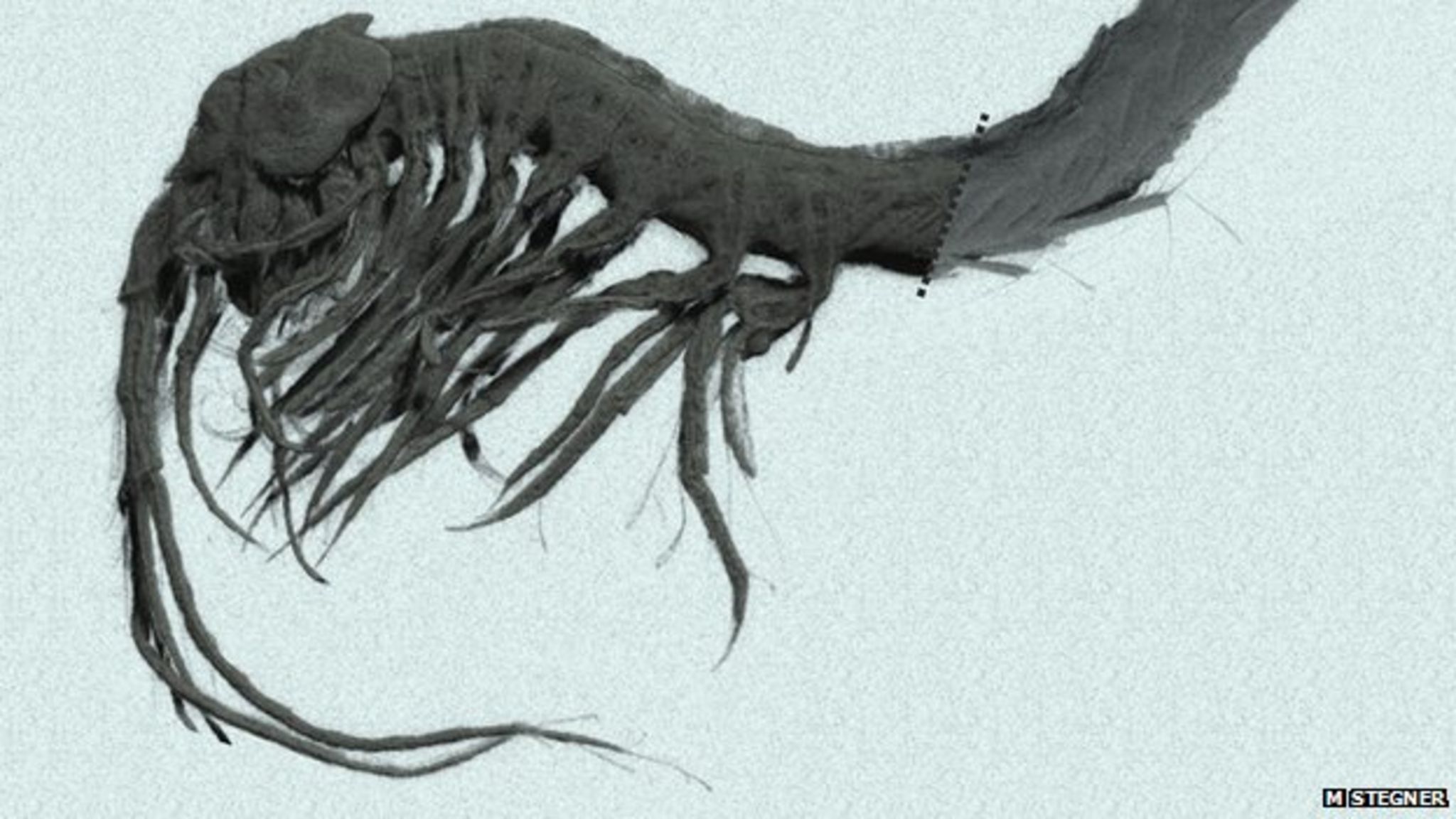
This task involved having me design a monster/creature using the methods explained in FZDSCHOOL's tutorial here and here. Our monsters however, had to be based of crustaceans, like crabs, lobsters etc. So for this task I did some visual research and catalogued a few pictures that gave me inspiration.

http://www.bbc.co.uk/news/science-environment-31988721 (05/10/15)

http://www.iflscience.com/plants-and-animals/top-ten-newly-discovered-species (05/10/15)

http://paleostories.blogspot.co.uk/2012/05/gobe-great-ordovician.html (05/10/15)

https://icebergstraightahead.wordpress.com/2009/08/18/another-day-another-trawl/img_0771/ (05/10/15)


Based on these crustaceans, I drew up the following 3 silhouettes:


After this, I went in and filled out these shapes with shading and detail:


Finally I had to add some colour:


Here is the final result. I found this technique to be very interesting and useful for forming strange creature shapes that each look unique, it also helps with practicing digital painting and getting shading right. I did find it difficult to include colour however. I find the first design to be rather boring in terms of colour but I do find the bio-mechanical theme interesting. The 2nd design is my personal favourite, the colours work well and the shape is very unique, not to mention the shading work on this seems the best. The last design is my least favourite, the shape feels uninspired and the colours don't seem to work well together. I may try this technique again in the future if I attempt to draw creatures again.

3D Art Practice: Wooden Barrel

Our first class of learning 3D in Maya 2016 involved following a tutorial to create a barrel, and then alter it to however we want for an eventual battle arena. This is what I produced:


Using the Burn and Dodge tool in Photoshop, I added marks onto the metal and wood to make it seem more realistic, as well as mis-shaping the metal part. Despite this the appearance of the barrel still looks fairly cartoony, and the texture map is a little strange as there's a black mark on the barrel and some parts don't match smoothly. I suppose in future model's I'll improve upon my texture work.

Friday, 2 October 2015

Research Task: Ancient India

For this task, we have to show evidence of our research skills by picking a theme out at random, my theme was "Ancient India". Since I don't know a lot about this subject the research I did was essential, I went about this by googling for articles on the said theme, and chronicling the area I found interesting: the history of India leading to 1500 BC.

The first thing I found out was how the landmass we know as India actually collided with Asia back 50 million years ago, this collision lead to the two mountain landscapes of the Himalayas and the Hindu Kush. Nearby to the Hindu Kush was the Indus River, an essential part of the growth of early Indian civilization; evidence of homosapien life in the Indus valley suggest it being one of the earliest dating back to 70,000 years. Slowly this life settled into the Indus Valley civilization and began to trade with other ones such as Mesopotamia at around 3200 BC.

Indus Civilisation is perhaps one of the largest ancient civilizations, as large cities where planned and built out of hard bricks made from mud, that were heated in a kiln oven. These large cities were built in the form of a grid, and featured roads with dug out wells for transporting water. These roads where also used to build houses upon, some even having multiple stories and a water drain system. The most famous example of this is Mohenjo-daro.

Mohenjo-daro Excavation Site

At around 1700 BC, the activity and culture in the Indus valley began to decline, although there is no clear evidence as to why, there is a popular theory: some believe a natural disaster forced out the natives or even changed the landscape in such a way that they had no choice but to migrate like an earthquake or the flooding of the Indus River, another theory is that they were driven out by an invasion but there is not a lot of evidence of a military presence. It is also unknown as to what the social ladder was like for this ancient Indus Civilization, or what they believed in, however some texts have made some historians believe that they worshiped a goddess, but the lack of a translation for the ancient language has made this uncertain. By 1500 BC these giant cities had been abandoned, however it is suspected that when this happened the Indo-Europeans moved in and where known as the Aryans; the Aryans have been suspected to have brought the horse, their religion (some believe is early Hinduism) and culture.

I personally found this section of ancient India fascinating, as there is a lot of mystery behind the Indus Valley civilization and their cities, and why they declined. It also has puzzled many historians, and given a blurred picture on what that society was like. In regards to the task I feel I have met the requirements, and showed my ability to research a given subject.


Bibliography:
Web Articles Researched:
https://sites.google.com/site/1ancientcivilizationsforkids/ancient-india (Accessed 02/10/15)
http://www.ancient.eu/india/ (Accessed 02/10/15)
Photos Used:
"Mohenjo-daro Excavation site": http://www.ancient.eu/image/2130/ (02/10/15)